Road-trip guide · Route 66 Centennial
Driving Route 66 in 2026: The Centennial Road-Trip Guide
2026 marks 100 years of the Mother Road. Here’s how to drive all 2,448 miles across 8 states — the must-stop towns, how long it really takes, and why the Centennial year is the one to do it.
On November 11, 1926, a patchwork of local roads from Chicago to Los Angeles was strung together and given a number: 66. A century later it’s the most famous road in America — and 2026 is its 100th birthday. The Mother Road turns the drive itself into the destination, and the Centennial is the rare excuse to do the whole thing.
This is the full-length version: 2,448 miles, eight states, and the neon, diners, and roadside giants that make Route 66 a moving museum of the American 20th century. Below is how long to budget, which direction to drive, the unmissable stops state by state, and the one thing to plan early in a Centennial year.
Take this itinerary with you.
Get “Driving Route 66 in 2026: The Centennial Road-Trip Guide” as a clean, printable trip planner — every stop, the timing, and the tips, ready for the glovebox or the group chat. Drop your email and it downloads instantly.
- 1The “Begin Route 66” signChicago, Illinois
The official start on Adams Street by the Art Institute — breakfast at Lou Mitchell’s first, then point the car west.
- 2Gateway Arch & Ted DrewesSt. Louis, Missouri
The great steel arch marks the threshold of the West; a concrete from Ted Drewes frozen custard is the local rite of passage.
- 3Cars Town (Galena)Kansas
A 1951 boom tow truck in Galena was the inspiration for “Tow Mater” — the highlight of Route 66’s shortest, 13-mile state.
- 4Blue Whale of CatoosaOklahoma
A grinning 80-foot concrete whale on a roadside pond — the most beloved folk-art stop on the Mother Road.
- 5Cadillac RanchAmarillo, Texas
Ten Cadillacs buried nose-down in a Panhandle field, repainted by visitors daily — bring a spray can.
- 6Midpoint CaféAdrian, Texas
The geographic halfway mark: 1,139 miles to Chicago, 1,139 to LA, and a slice of “ugly crust” pie to mark it.
- 7Blue Swallow Motel neonTucumcari, New Mexico
A 1939 motor court whose restored neon is the most photographed sign on the route — Tucumcari after dark is pure Americana.
- 8Petrified Forest National ParkArizona
The only national park the road runs through — fossilized logs, the Painted Desert, and a rusting 1932 Studebaker marking the old alignment.
- 9“Standin’ on the Corner”Winslow, Arizona
The Eagles corner, complete with the flatbed Ford — a two-minute photo stop everyone takes anyway.
- 10SeligmanArizona
Where barber Angel Delgadillo launched the movement to save Historic Route 66 — and the model for Pixar’s Radiator Springs.
- 11Oatman’s wild burrosArizona
A gold-rush town in the Black Mountains where descendants of prospectors’ burros wander the main street; the hairpin road in is a thrill.
- 12“End of the Trail”Santa Monica, California
The sign on Santa Monica Pier where the road meets the Pacific — 2,448 miles done, sunset over the ocean.
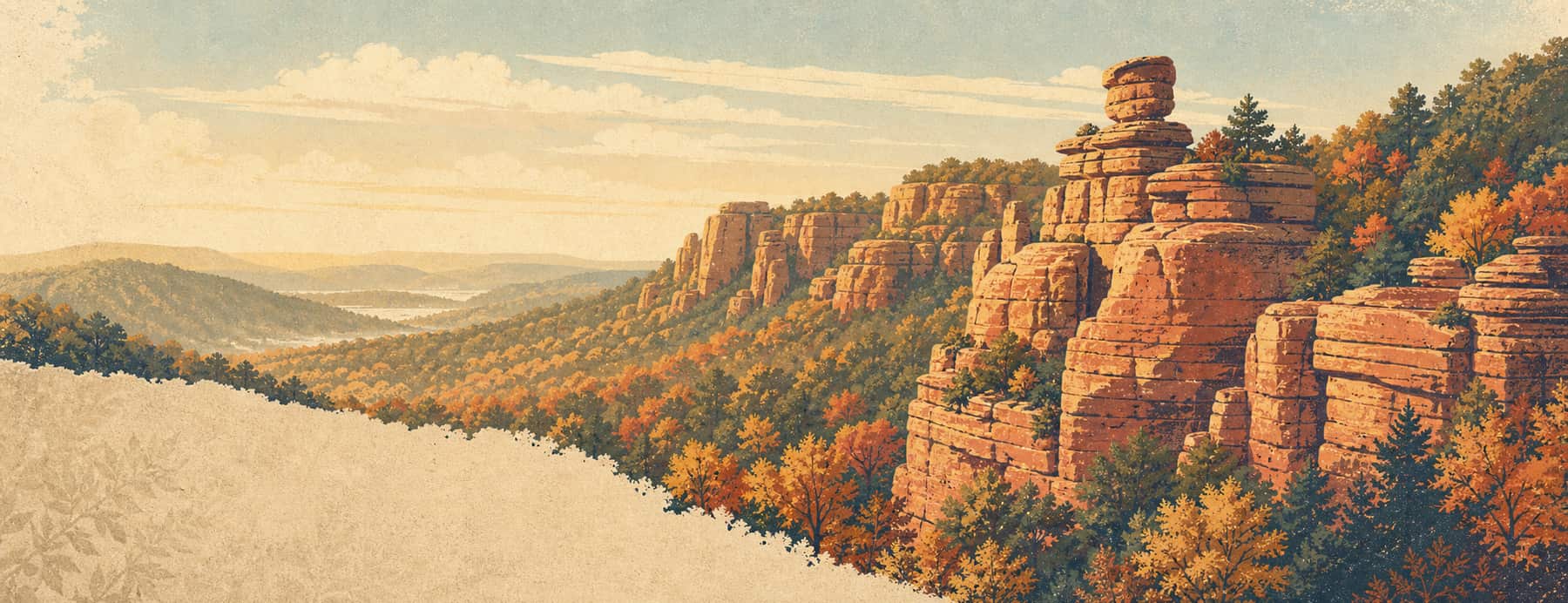
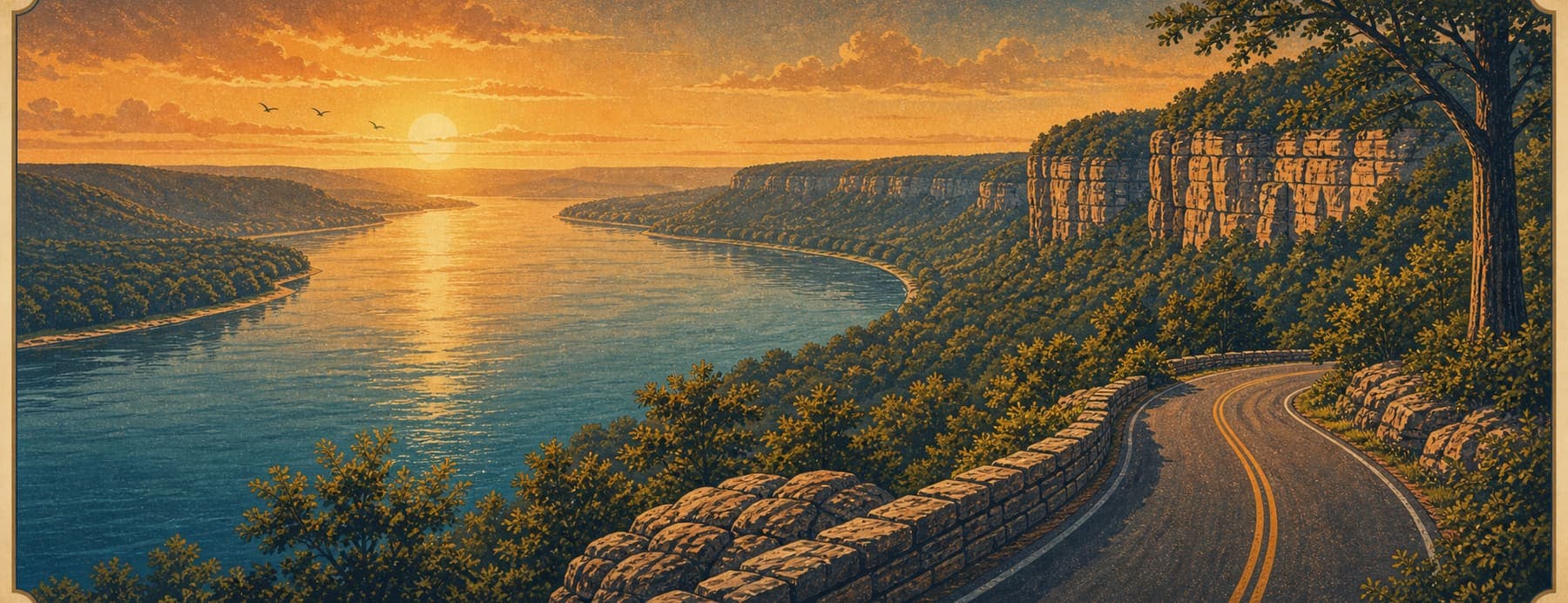
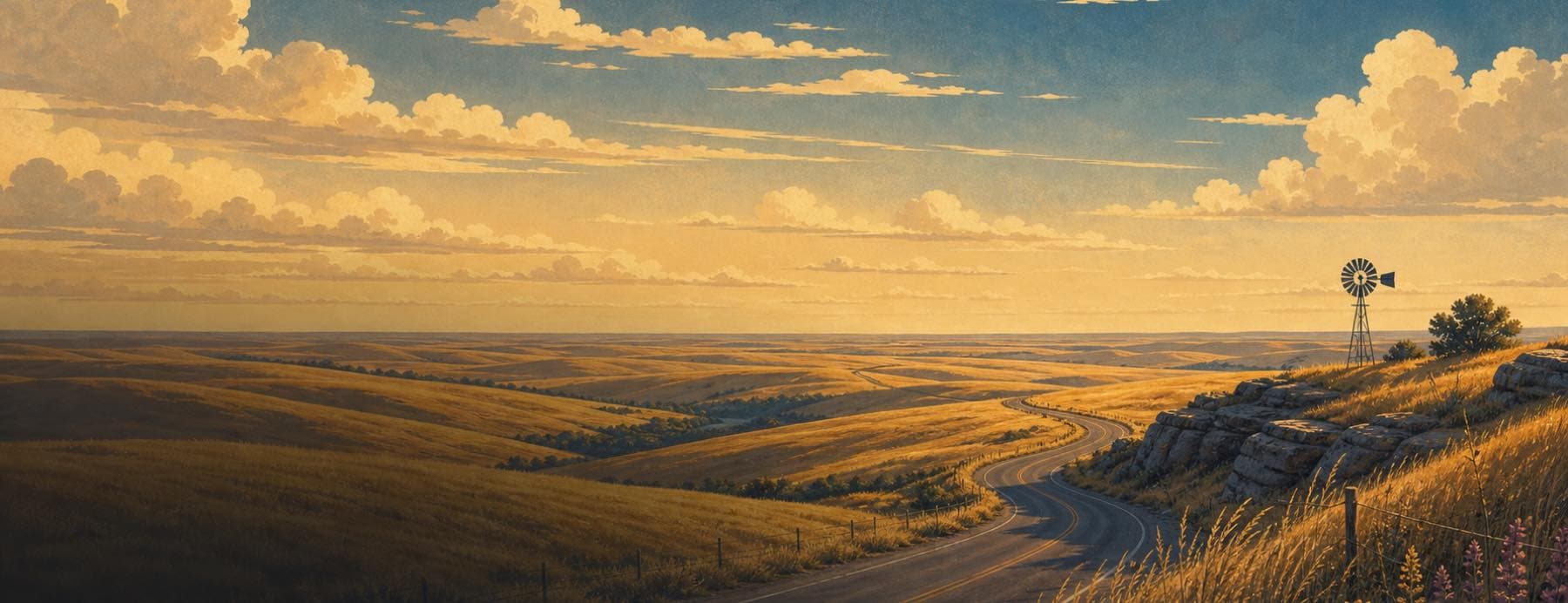
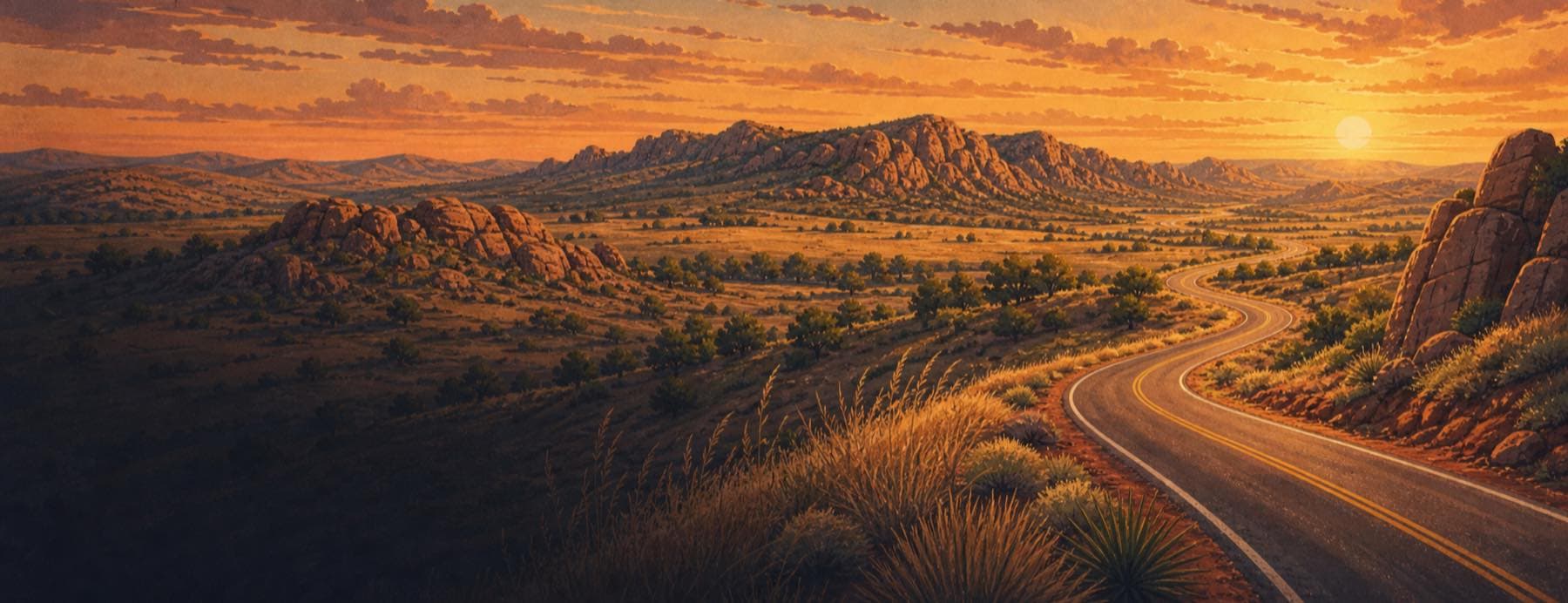
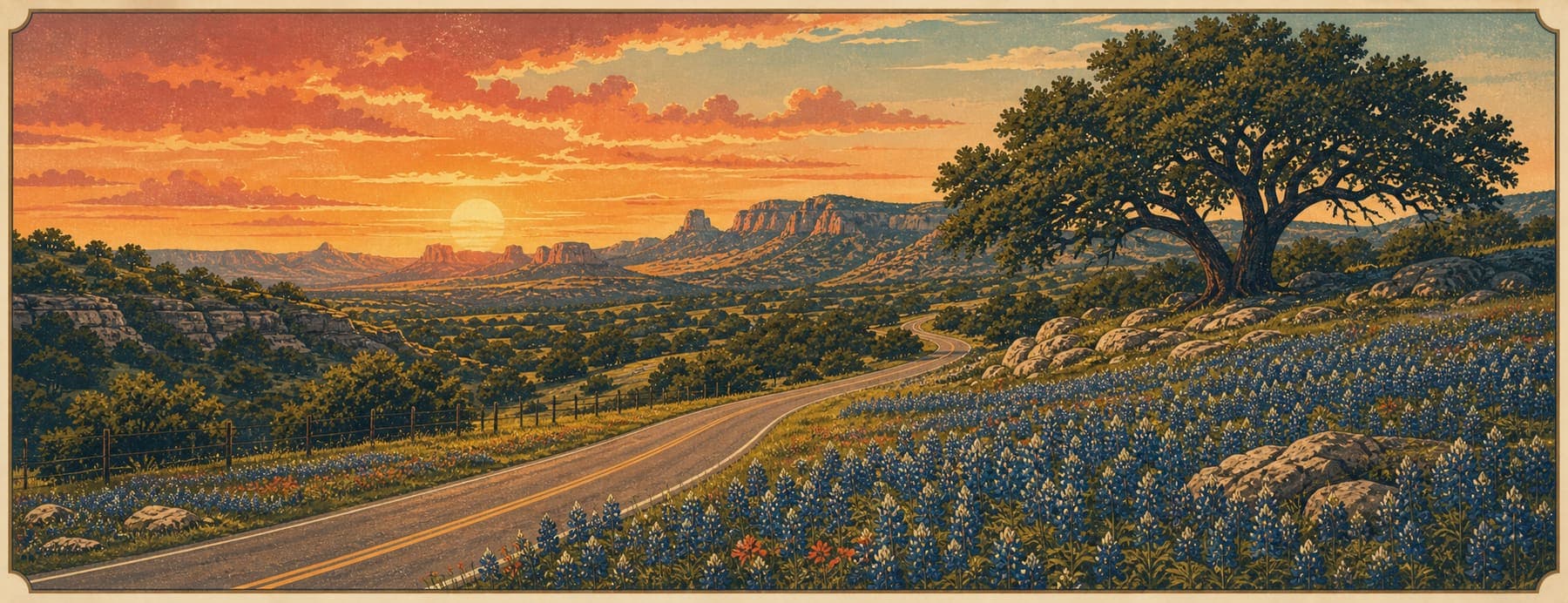
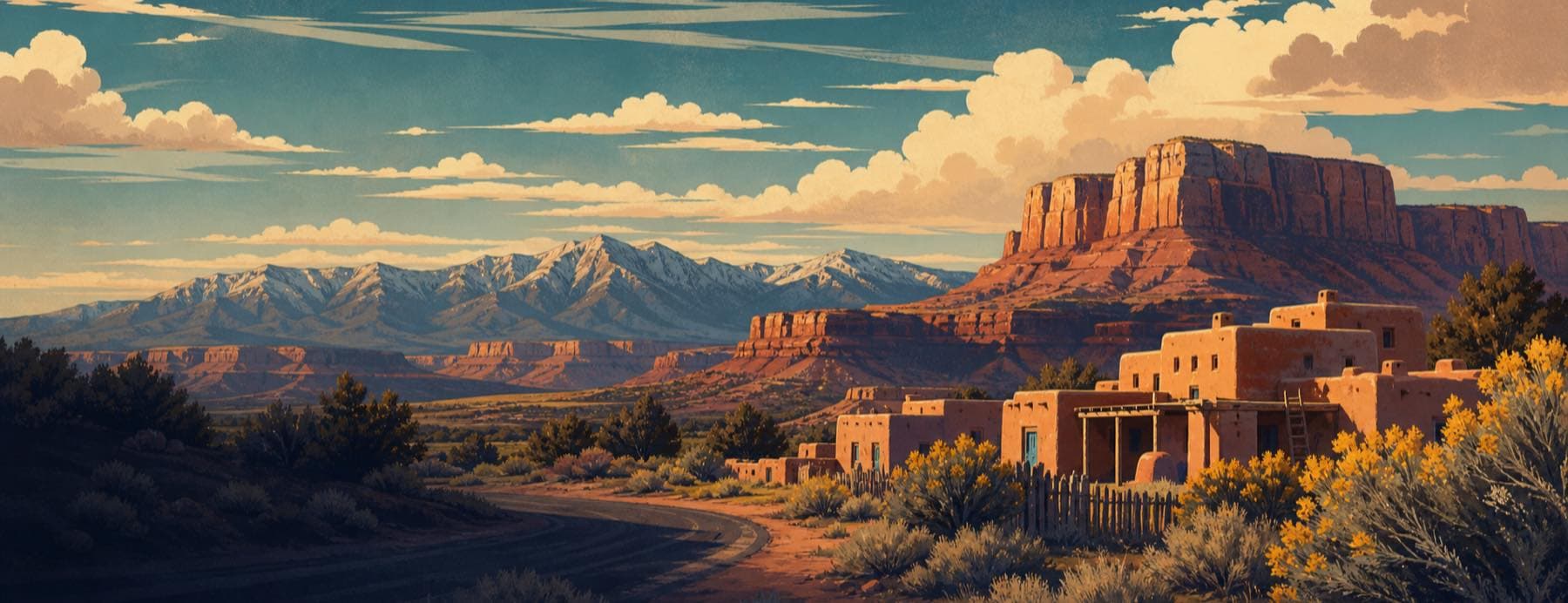
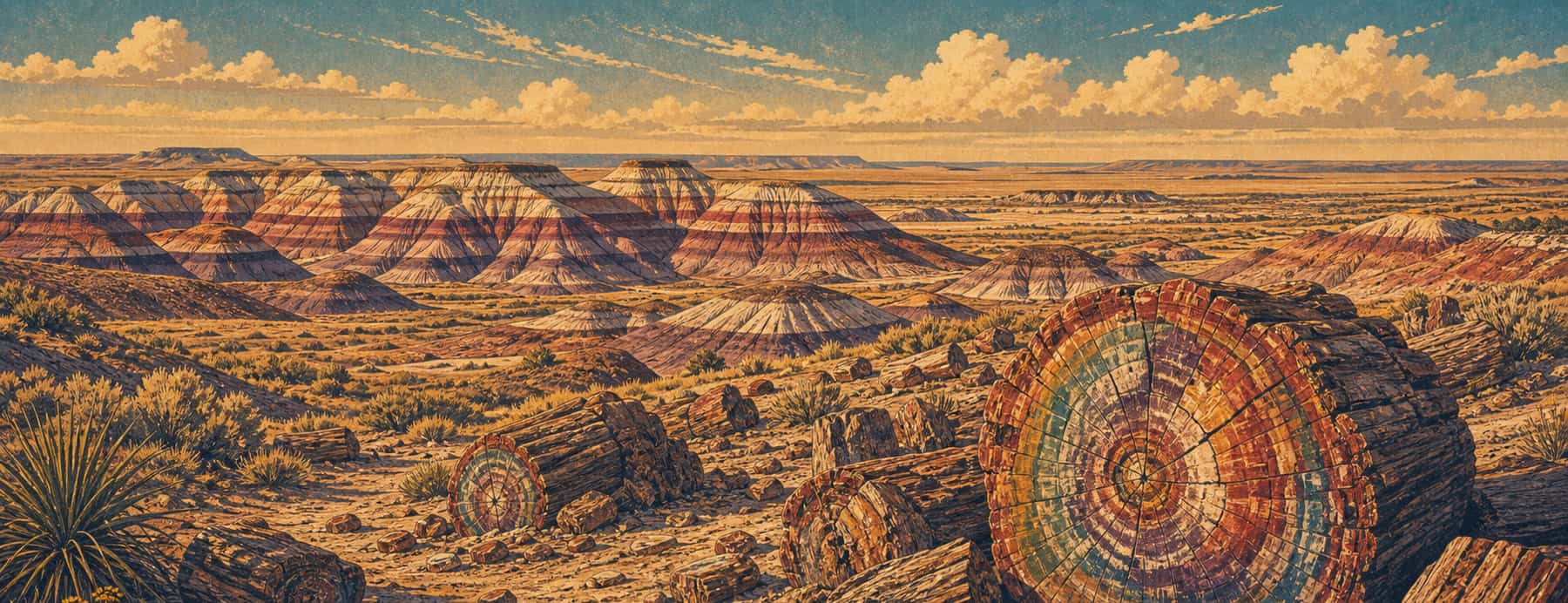
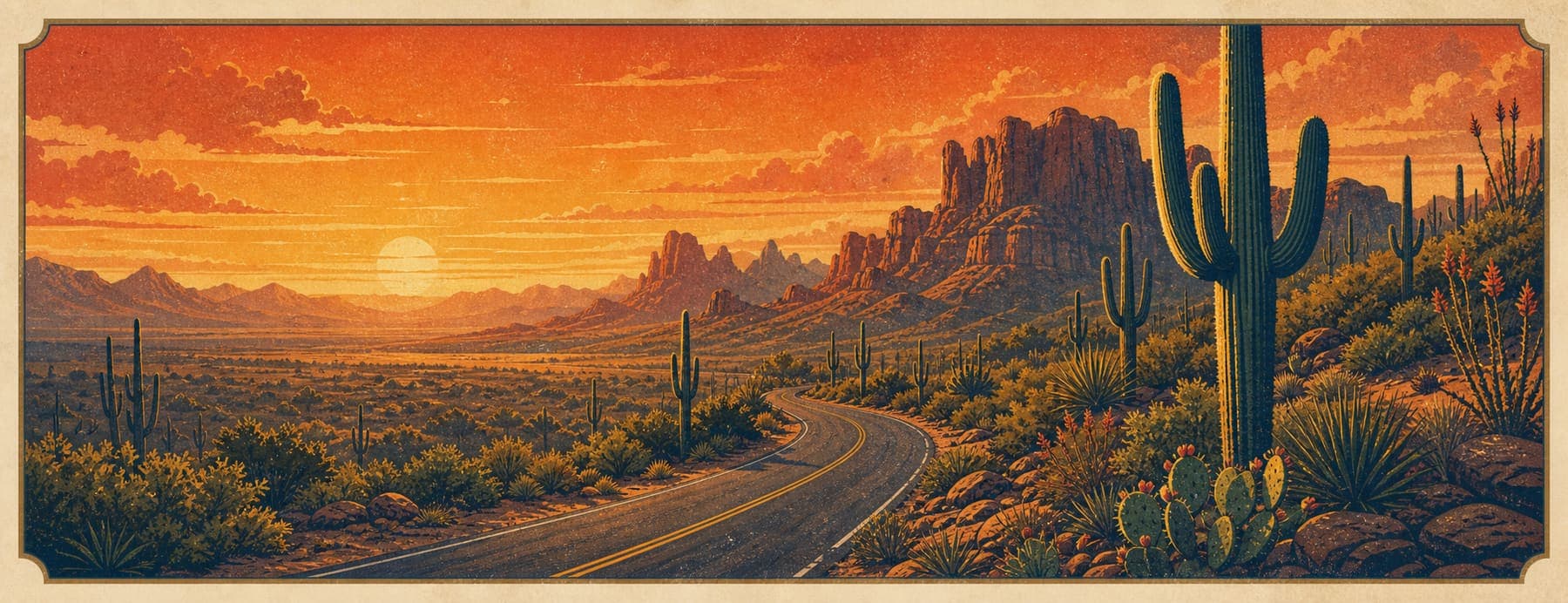
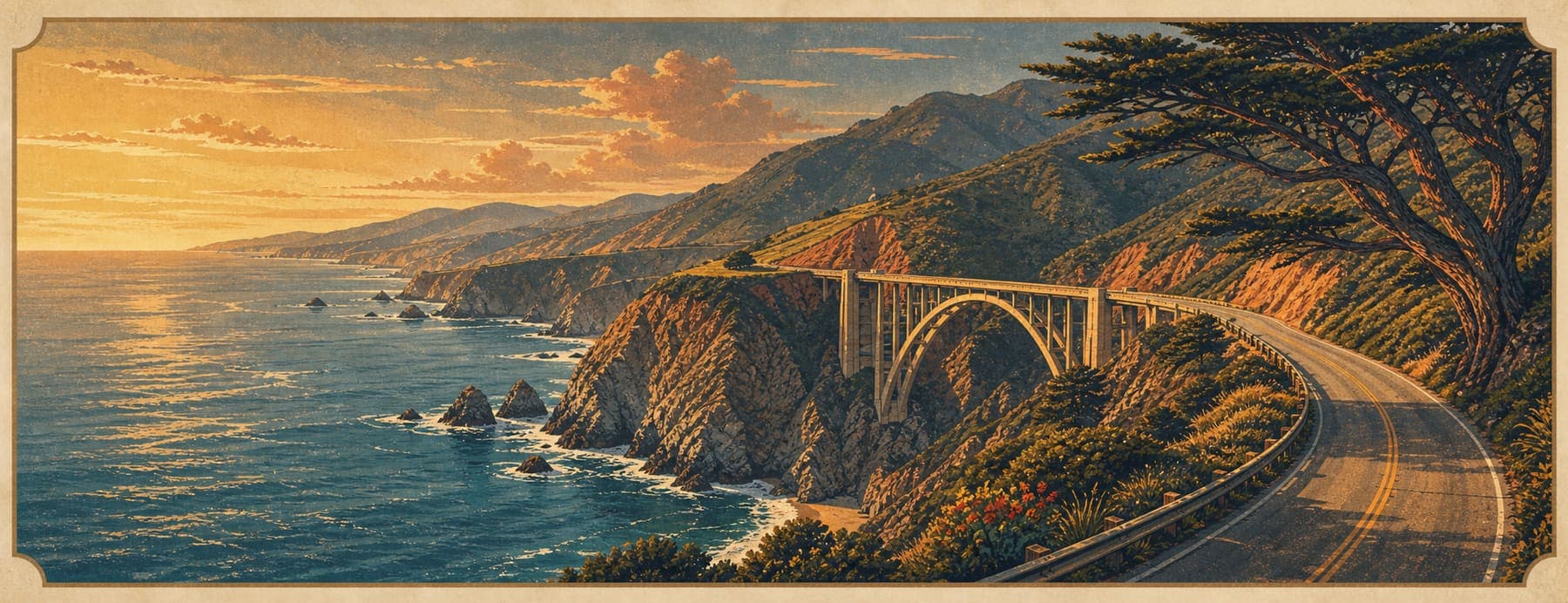
Stylized illustration, not a photo — the real place looks different (and that’s half the fun).
Why 2026 is the year to drive it
Route 66’s Centennial has put a century of restoration energy into the towns along it — neon relit, motor courts reopened, museums refreshed, and a wave of travelers who finally have their excuse. The flip side: the small towns that make the route magic (Tucumcari, Williams, Seligman, Oatman) have very few rooms, and a Centennial year fills them fast. The road has never looked better; it’s also never been busier. Plan ahead and you get the best of it.
The basics: how far, how long, which direction
Route 66 runs 2,448 miles from Chicago to Santa Monica through eight states — Illinois, Missouri, Kansas, Oklahoma, Texas, New Mexico, Arizona, and California. Two weeks is the sweet spot; ten days is a solid pace; a week is possible but you’ll be choosing stops over lingering at them. Drive east to west, Chicago to the coast — it’s the traditional direction, it puts the afternoon sun behind you, and it ends, perfectly, at the Pacific.
Illinois: where it begins
From the Loop, the road threads cornfield prairie past a string of classic stops: the Gemini Giant, the murals and Route 66 Hall of Fame in Pontiac, Funks Grove maple sirup, and the original corn dog at the Cozy Dog Drive In in Springfield. An easy, flat first day that eases you into the rhythm of the road.
Missouri: caverns, custard, and the Ozark edge
Cross the Mississippi at St. Louis under the Gateway Arch, then roll into the wooded Ozark foothills — Meramec Caverns (a genuine 1930s tourist trap, gloriously), the restored Gay Parita Sinclair station, and Devil’s Elbow’s old alignment along the river. Browse what else is nearby on our Missouri road-trip hub.
Kansas: thirteen miles that punch above their length
Route 66 only clips the southeast corner of Kansas for about 13 miles — but they’re dense: Galena’s Cars-famous tow truck, the graceful Rainbow Curve Marsh Arch bridge, and Baxter Springs. Blink-and-you’ll-miss-it, so don’t blink.
Oklahoma: the heart of the Mother Road
No state carries more Route 66 mileage than Oklahoma, and none loves it harder — the Blue Whale of Catoosa, the round barn and the pop-bottle tower at Pops 66 in Arcadia, Tulsa’s art-deco downtown and Cyrus Avery (the “Father of Route 66”) plaza, and the route museums in Clinton and Elk City. See the rest of the state’s stops on our Oklahoma hub.
Texas: the Panhandle and the midpoint
The road runs arrow-straight across the high, windy Panhandle. Stand at the Midpoint Café in Adrian (exactly halfway), bury your hands in spray paint at Cadillac Ranch outside Amarillo, and photograph the U-Drop Inn’s Conoco tower in Shamrock — the building that inspired Ramone’s body shop in Cars.
New Mexico: neon, adobe, and high desert
New Mexico is where the route gets romantic: Tucumcari’s mile of restored motel neon, the pre-1937 loop up through Santa Fe, and Albuquerque’s Central Avenue with the KiMo Theatre and the Nob Hill signs. Higher and cooler than the plains behind you — and the food turns to green chile.
Arizona: the most iconic stretch
This is the postcard run: Petrified Forest and the Painted Desert, the concrete teepees of the Wigwam Motel in Holbrook (a real-life Cozy Cone from Cars), the “Standin’ on the Corner” park in Winslow, and Meteor Crater just off the road. Then the mountain town of Williams — the last stretch of 66 bypassed by the interstate, and the gateway to the Grand Canyon — and Seligman, where the preservation movement was born. Drop underground at Grand Canyon Caverns before the white-knuckle switchbacks down to Oatman and its wild burros.
California: the Mojave and the end of the trail
The hardest, most beautiful leg: across the Mojave through Needles, Amboy’s lonely Roy’s Motel & Café, and Barstow, then down into the LA basin and out to the Santa Monica Pier. Touch the “End of the Trail” sign, watch the sun drop into the Pacific, and let it sink in that you drove here from Chicago.
When to go — and a Centennial-year warning
Late spring (May) and early fall (mid-September through October) are ideal: mild weather across all eight states, before the Mojave and Panhandle bake in summer and before snow reaches the higher Arizona and New Mexico stretches in winter. In the Centennial year especially, book the small-town landmark motels — the Blue Swallow, Williams, Seligman, Oatman — weeks ahead. Their charm is exactly why they sell out.
Where to stay
Find a place to stay near Tucumcari.
Hotels, cabins, and rentals close to the action — compare and book for your trip.
At the destination: Williams →
We may earn a commission from bookings made through these links — at no extra cost to you.
Route 66 is the trip Roamward was built for: a long scenic line with a hundred reasons to pull over. Drop the route into the app to map the drive, save the stops that matter to you, and collect the states and badges as you cross them — Chicago to the Pacific, one verified mile at a time.
Common questions
How long does it take to drive Route 66?
Two weeks is the comfortable pace, ten days is a solid clip, and a week is the rushed minimum. The road is 2,448 miles, but the point is the stops — budget time to actually get out of the car.
Which direction should you drive Route 66?
East to west — Chicago to Santa Monica. It’s the traditional direction, it keeps the afternoon sun behind you instead of in your eyes, and it ends at the Pacific Ocean, which is the perfect finish.
Is Route 66 worth driving in 2026?
Especially in 2026. The Centennial has fueled a wave of restoration — relit neon, reopened motor courts, refreshed museums — so the road looks better than it has in decades. Just expect more company and book small-town lodging early.
What is the best time of year to drive Route 66?
Late spring (May) and early fall (September–October). The weather is mild across all eight states, avoiding both the brutal summer heat of the Mojave and Texas Panhandle and the winter snow at higher elevations in Arizona and New Mexico.
How many states does Route 66 pass through?
Eight: Illinois, Missouri, Kansas, Oklahoma, Texas, New Mexico, Arizona, and California. Kansas has the shortest stretch at about 13 miles; Oklahoma has the most.