Road-trip guide · Utah’s Mighty 5
Utah’s Mighty 5: The National Parks Road-Trip Itinerary
Zion, Bryce, Capitol Reef, Arches, and Canyonlands — five national parks on one unforgettable desert loop. The route, the order, how many days, where to camp, and when to go.
Utah’s Mighty 5 is five national parks on one southern-Utah loop: Zion, Bryce Canyon, Capitol Reef, Arches, and Canyonlands. Seven days is the comfortable editorial shape — two nights at Zion, one at Bryce, one crossing Scenic Byway 12 into Capitol Reef, then two park days from Moab. That is not an NPS day count. The published drives are short where the parks state them (Zion to Bryce is 86 miles, about two hours; Bryce to Capitol Reef is about three hours on UT-12). Seven days is not “tight” because of mileage. It gets tight if you stack Angels Landing, Fiery Furnace, and both Moab parks without the permit and congestion checks in the table below.
None of the five require an advance park-entry reservation in 2026. What you still reserve is activity-specific: Angels Landing at Zion, Fiery Furnace and Devils Garden campground at Arches, plus any campground or wilderness permit. A valid entrance pass is still required at each gate; the America the Beautiful resident annual pass is $80.
Seven days, five parks
A Mighty 5 itinerary skeleton that leaves room to hike
This is the minimum comfortable shape—not a promise that every trail, road, or permit will be available on your dates.
| Day | Base plan | Don't rush this |
|---|---|---|
| 1–2 | Zion | Two nights; settle permits, shuttle logistics, and heat before choosing the headline hike |
| 3 | Bryce Canyon | Use the elevation change as a shorter park day and keep a warm layer handy |
| 4 | Scenic Byway 12 → Capitol Reef | Treat the connector as a scenic day instead of racing it |
| 5 | Arches | Choose an early or late park window and keep a congestion backup |
| 6 | Canyonlands | Pick Island in the Sky for a first visit; deeper districts require more planning |
| 7 | Moab buffer or departure | Keep one flexible block for weather, fatigue, or the stop you refused to rush |
Checked August 2026. Arches does not require advance timed entry in 2026, but congestion can still restrict entrance; Angels Landing uses a separate permit system.
Primary sources: Arches 2026 planning notice · Angels Landing permits · Zion current conditions
Drive + permit check
Official miles and what you still reserve
Drive figures appear only where a managing agency publishes them. Blank mileage is intentional.
| Day | Parks / drive | Official drive note | Entry reservation? | Still reserve / pay | Primary source |
|---|---|---|---|---|---|
| 1–2 | Zion (Springdale) | From Las Vegas, NPS lists Harry Reid (LAS) at 170 miles | No park-entry reservation | Entrance pass (private vehicle $35 / 7 days). Angels Landing: separate lottery, $6 to apply (up to 6 people) + $3 per person if awarded. Seasonal Zion Canyon shuttle is a separate check — not a park-entry ticket. Non-U.S. residents 16+ pay a $100 surcharge here unless admitted on an Annual or America the Beautiful pass. | Zion fees · Angels Landing permits · Zion directions |
| 3 | Zion → Bryce Canyon | NPS: 86 miles, about 2 hours via the Zion–Mt. Carmel Highway. Vehicles over 35 ft 9 in long, 7 ft 10 in wide, 11 ft 4 in high, or 50,000 lb cannot use that highway between Canyon Junction and the East Entrance (in effect June 7, 2026); use the posted alternate. | No | Entrance pass (private vehicle $35 / 7 days). Free park shuttle is encouraged, not required. Same $100 nonresident surcharge as Zion unless on an Annual / America the Beautiful pass. | Zion area FAQ · Large vehicles · Bryce fees · Bryce directions |
| 4 | Bryce → Capitol Reef on UT-12 | NPS: Scenic Byway 12 is 123 miles (US-89 south of Panguitch to Torrey). About 3 hours Bryce to Capitol Reef. Summit 9,600 ft on Boulder Mountain; winter hazard. Do not follow GPS onto South Draw Road. | No | Entrance pass (private vehicle $20). Backcountry, canyoneering, and climbing need permits. | Capitol Reef directions · Capitol Reef fees |
| 5 | Capitol Reef → Arches (Moab) | No single NPS mile figure for this leg. East on SR-24, then US-191 to Moab. Arches entrance is 5 miles north of Moab. | No advance timed entry in 2026. Congestion can still restrict entrance or parking. | Entrance pass required (Visit Utah / NPS: $30 per vehicle). Still reserve Devils Garden campground and Fiery Furnace (ranger-led $16 / person; private permit $10 / person; children under 5 not permitted). | Arches 2026 timed-entry lift · Arches directions · Arches fees · Visit Utah Mighty 5 fees |
| 6 | Canyonlands from Moab | No in-park road connects the districts. From US-191 north of Moab, UT-313 leads to Island in the Sky (first-visit district). Needles is UT-211 south of Moab. The Maze is unpaved. | No | Entrance pass (private vehicle $30). Day-use on backcountry roads, overnight, river, and stock trips need permits. Vehicles over 25 ft have limited parking at Island in the Sky. | Canyonlands directions · Canyonlands fees |
| 7 | Moab buffer or departure | — | — | Recheck current conditions before a second Arches window or a Needles add-on. | Arches current conditions · Canyonlands current conditions |
Pass that covers all five: America the Beautiful resident annual pass, $80 (NPS entrance passes). Non-resident annual pass is $250. Digital pass via Recreation.gov.
Updated August 2026. Fees, lotteries, shuttle seasons, and road limits change. Recheck the linked park page before you drive.
Take this itinerary with you.
Get “Utah’s Mighty 5: The National Parks Road-Trip Itinerary” as a clean, printable trip planner — every stop, the timing, and the tips, ready for the glovebox or the group chat. Drop your email and it downloads instantly.
- 1Zion National ParkSpringdale, Utah
The blockbuster: 2,000-foot sandstone walls, the chain-assisted spine of Angels Landing, and the river-wading Narrows. Lowest and hottest of the five — start here.
- 2Bryce Canyon National ParkBryce, Utah
Not a canyon but an amphitheater of glowing orange hoodoos. Walk down the Navajo Loop into the spires at sunrise. High and cool at 8,000+ feet — bring a layer.
- 3Capitol Reef National ParkTorrey, Utah
The quiet one: a 100-mile wrinkle in the earth called the Waterpocket Fold, plus historic Fruita orchards where you can pick your own fruit in season.
- 4Arches National ParkMoab, Utah
Over 2,000 natural arches, headlined by Delicate Arch at sunset and the Devils Garden trail. No advance park-entry reservation is required in 2026, though congestion can temporarily restrict entrance.
- 5Canyonlands National ParkMoab, Utah
Vast and wild: stand at Mesa Arch for sunrise and Grand View Point over a canyon country the size of Rhode Island. Island in the Sky is the easy district; the Needles and Maze go deep.
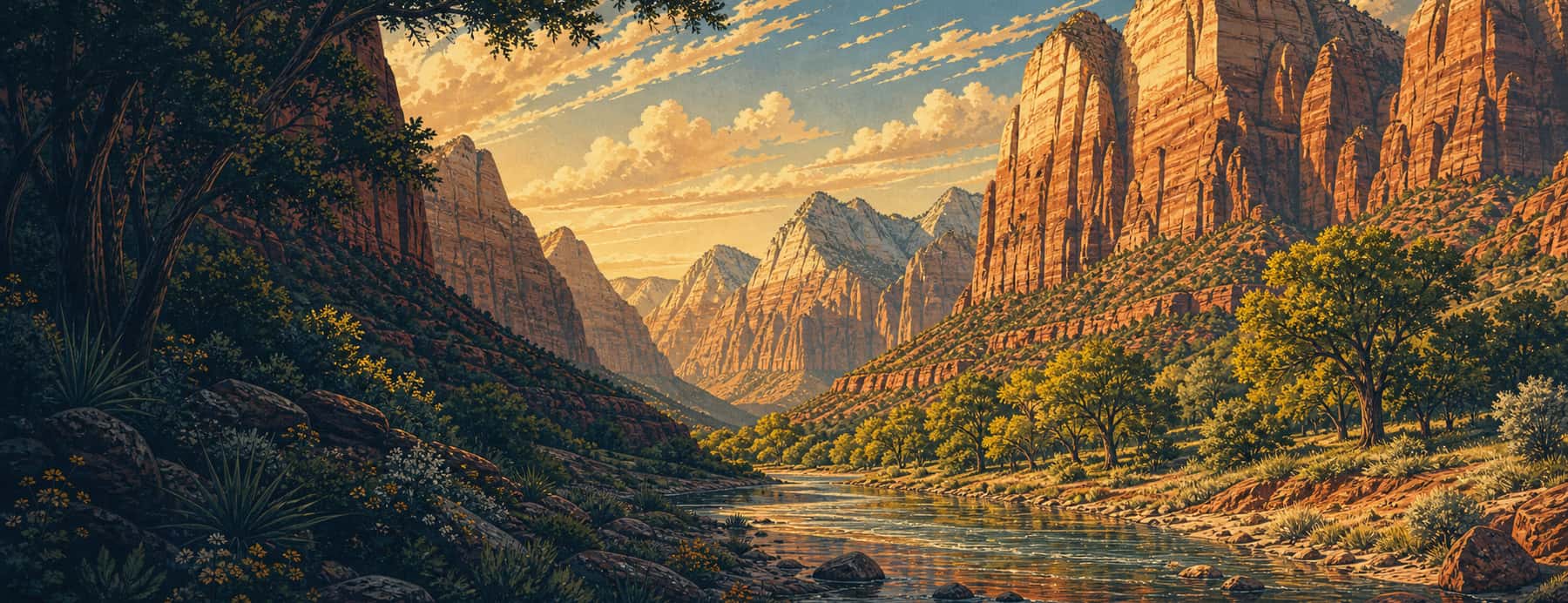
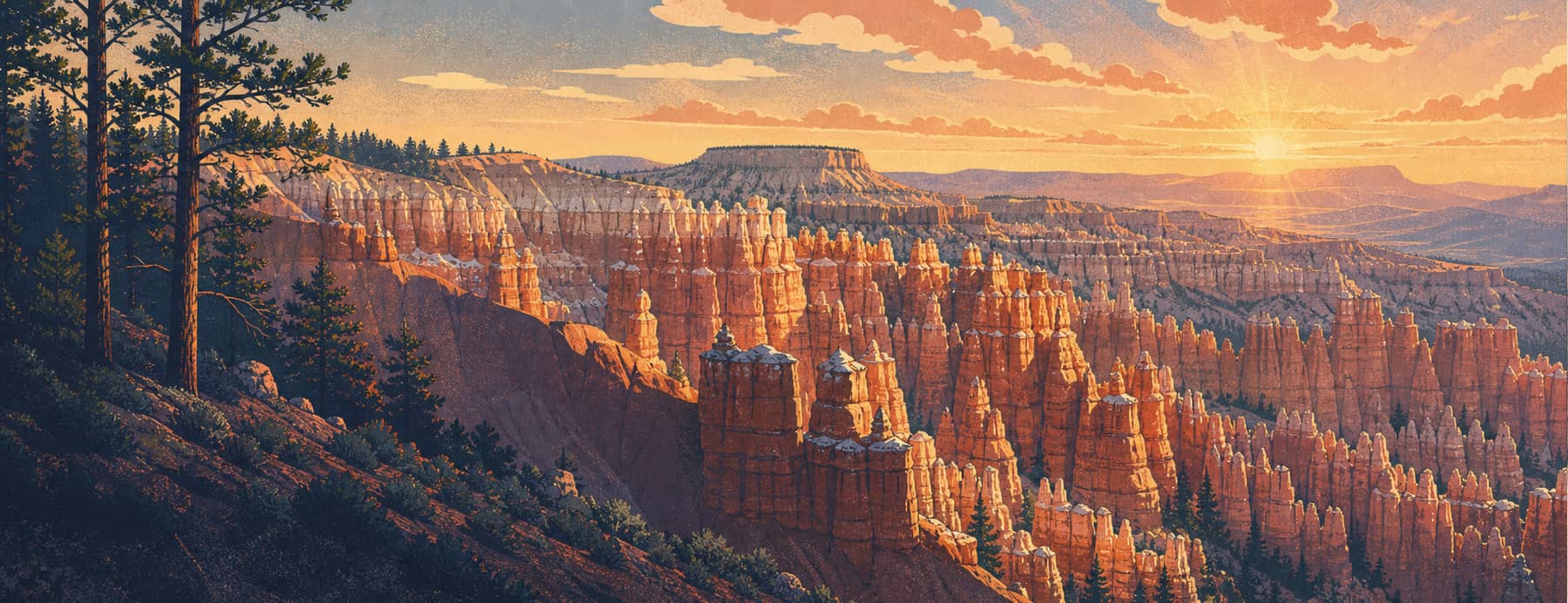
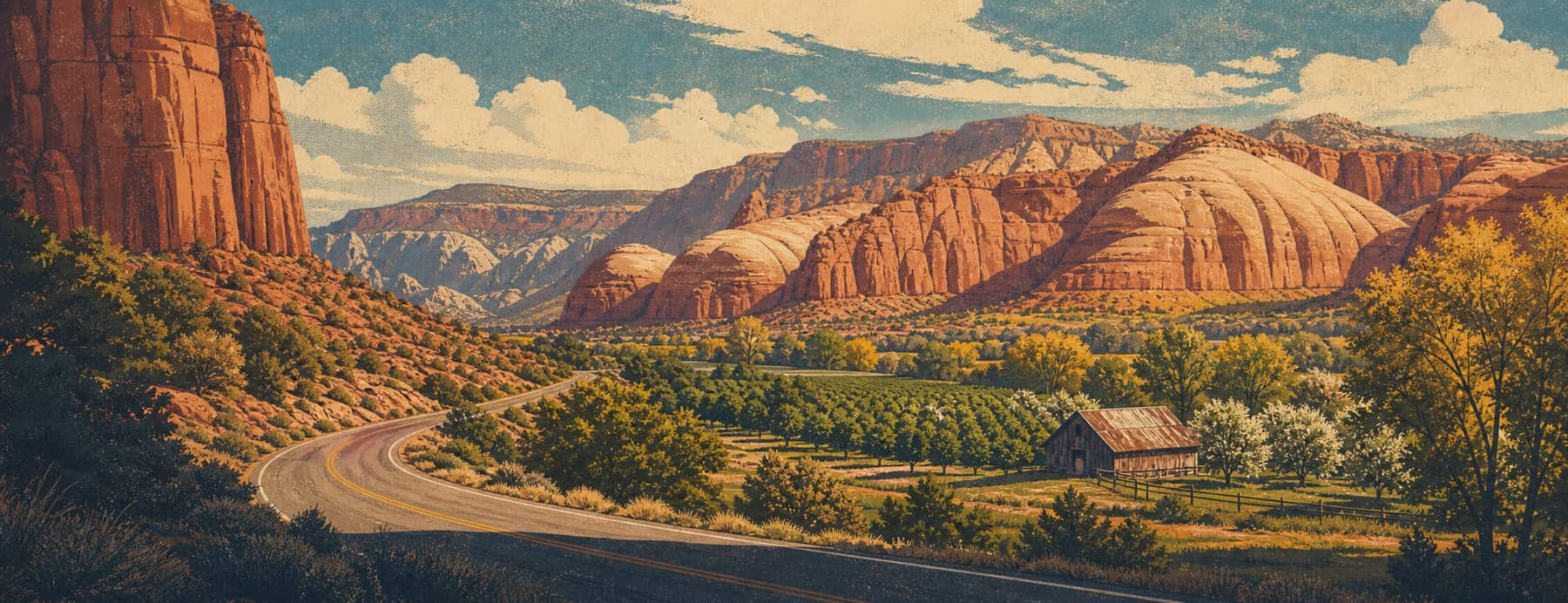
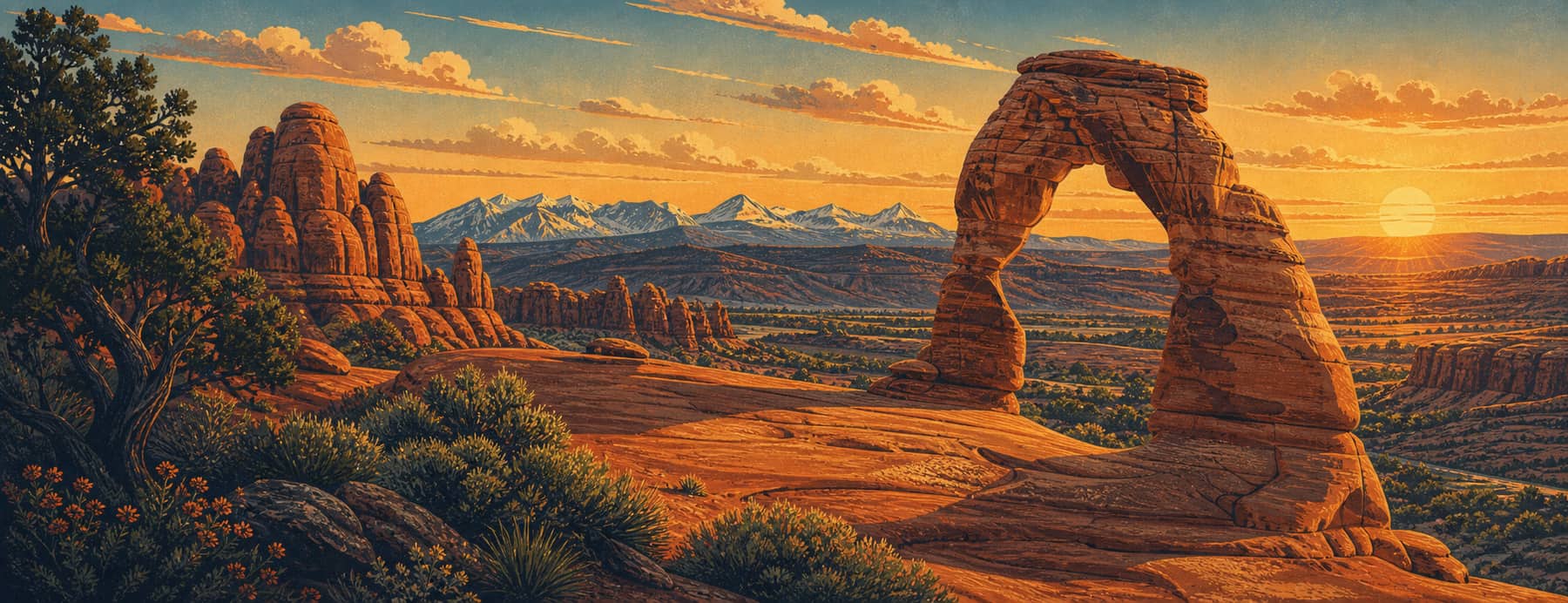
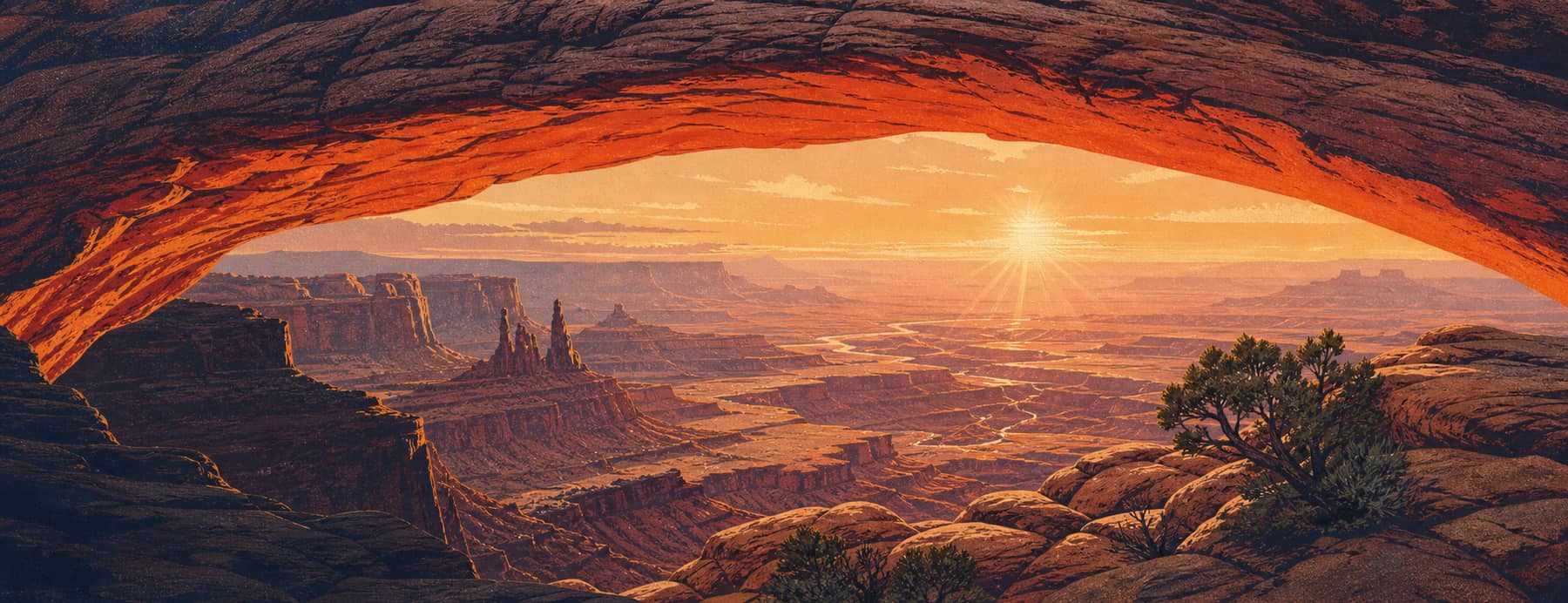
Stylized illustration, not a photo — the real place looks different (and that’s half the fun).
The loop and the order
The classic run goes west to east: fly into Las Vegas, drive to Zion, then Bryce Canyon, across to Capitol Reef, and finish at Moab for Arches and Canyonlands (flying home from Salt Lake or back to Vegas). Starting from Salt Lake City? Just run it in reverse, Moab first. Either way it’s a loop of roughly 1,000–1,400 miles depending on side trips — see everything Utah has in one place on our Utah road-trip hub.
How many days do you need
Seven days is the sweet spot — about a day and a half each at Zion and the Moab parks, a half-day at Bryce and Capitol Reef, and the drives in between. Ten days lets you hike deep and add Grand Staircase-Escalante or the Needles. Five is the rushed minimum: you’ll see the highlights but live in the car. Desert heat and big elevation swings make this a trip you don’t want to cram.
Zion: start with the blockbuster
Base in Springdale and ride the seasonal shuttle up Zion Canyon when it is operating. Angels Landing requires its own permit; that permit and the separate Zion Canyon shuttle rules are different trip checks. The other headliner is The Narrows, where the trail *is* the river. Go early: Zion is the lowest and hottest of the five, and by mid-morning in summer both the crowds and the heat are real.
Bryce Canyon: the hoodoo amphitheater
An easy 85 miles from Zion but a different planet — and 4,000 feet higher. The move is to walk down into the hoodoos on the Navajo Loop / Queen’s Garden combo rather than just peer from the rim. Bryce’s optional but recommended shuttle is scheduled for April 3–October 18 in 2026. At 8,000–9,100 feet it stays cool even in July and can hold snow into spring, so pack a layer no matter the season.
Scenic Byway 12: the best drive of the trip
The stretch between Bryce and Capitol Reef isn’t a connector — it’s a destination. Utah’s Scenic Byway 12, an All-American Road, climbs over Boulder Mountain and threads the slickrock of Grand Staircase-Escalante, with the famous Hogback ridge dropping away on both sides. Don’t just drive it; budget half a day. Full breakdown on our Scenic Byway 12 guide.
Capitol Reef: the underrated one
The least-visited of the five and a genuine break from the crowds. Drive the paved Scenic Drive into Capitol Gorge, wander the green Fruita orchards (you can pick cherries, apricots, apples in season), and if you’ve got a high-clearance vehicle, the remote Cathedral Valley loop is otherworldly. Easy to underestimate, easy to fall for.
Arches & Canyonlands: the Moab finale
Moab is basecamp for the last two. Arches does not require an advance park-entry reservation in 2026, but heavy traffic can still cause congestion or temporary entrance restrictions; campground and Fiery Furnace reservations are separate. Canyonlands’ Island in the Sky district is just up the road — Mesa Arch at sunrise is the iconic shot, Grand View Point the jaw-dropper. With more time, drop into the Needles or the legendary White Rim Road.
Where to camp (the part most itineraries miss)
The Moab area hides some of the most spectacular camping in the West: free dispersed slickrock at Willow Springs Road minutes from Arches, the cliff-edge permit sites of the White Rim Road inside Canyonlands, and Muley Point’s thousand-foot overlook of the San Juan goosenecks an hour south. Browse all of them — plus park campgrounds and gateway-town stays — on our Utah camping guide.
Stay & experience
Find a place to stay near Springdale, Utah.
Hotels, cabins, and rentals close to the action — compare and book for your trip.
We may earn a commission from bookings made through these links — at no extra cost to you.
Things to do near Zion National Park
Browse guided tours and bookable activities that fit this stop.
Book on Viator — Roamward earns a commission, at no extra cost to you.
When to go, and what to reserve
Spring (April–May) and fall (September–October) are ideal: warm days, cool nights, and the desert at its best. Summer bakes the low parks (Zion, Arches, Canyonlands routinely top 100°F), while winter brings snow and closures to high Bryce. For 2026, Arches has no advance park-entry reservation; still check current entrance conditions, then handle campground or Fiery Furnace reservations separately. Angels Landing permits and the seasonal Zion Canyon shuttle are also separate trip checks.
The Mighty 5 is a planning puzzle — five parks, big distances, timed permits, and the best stops hiding between the marquee names. That’s exactly what Roamward is for: drop the loop in, map the scenic order, save the arches and overlooks and camps that matter to you, and collect Utah and every park as you go. One red-rock loop, fully planned.
Common questions
How many days do you need for Utah’s Mighty 5?
Seven days is ideal — enough for a day and a half each at Zion and the Moab parks, a half-day at Bryce and Capitol Reef, plus the scenic drives between. Five days is the rushed minimum; ten lets you hike deeper and add side trips like Grand Staircase-Escalante.
What order should you do the Mighty 5 in?
West to east from Las Vegas: Zion, Bryce Canyon, Capitol Reef, then Arches and Canyonlands at Moab. From Salt Lake City, run it in reverse starting at Moab. Either way it’s a loop of about 1,000–1,400 miles.
What’s the best time of year to visit Utah’s national parks?
Spring (April–May) and fall (September–October) — warm days, cool nights, manageable crowds. Summer is brutally hot in Zion, Arches, and Canyonlands (often over 100°F), and winter brings snow and some closures to high-elevation Bryce Canyon.
Do you need reservations for the Mighty 5 in 2026?
No park-entry reservation at any of the five. You still need a valid entrance pass, and you still reserve Angels Landing, Fiery Furnace, campgrounds, and wilderness or backcountry permits. Arches can still hold you at the gate when parking fills.
Which of the Mighty 5 is the best?
Zion and Bryce Canyon are the crowd favorites for sheer drama, but Capitol Reef is the underrated standout if you want fewer people, and Canyonlands is the most vast and wild. The beauty of the loop is you don’t have to choose.