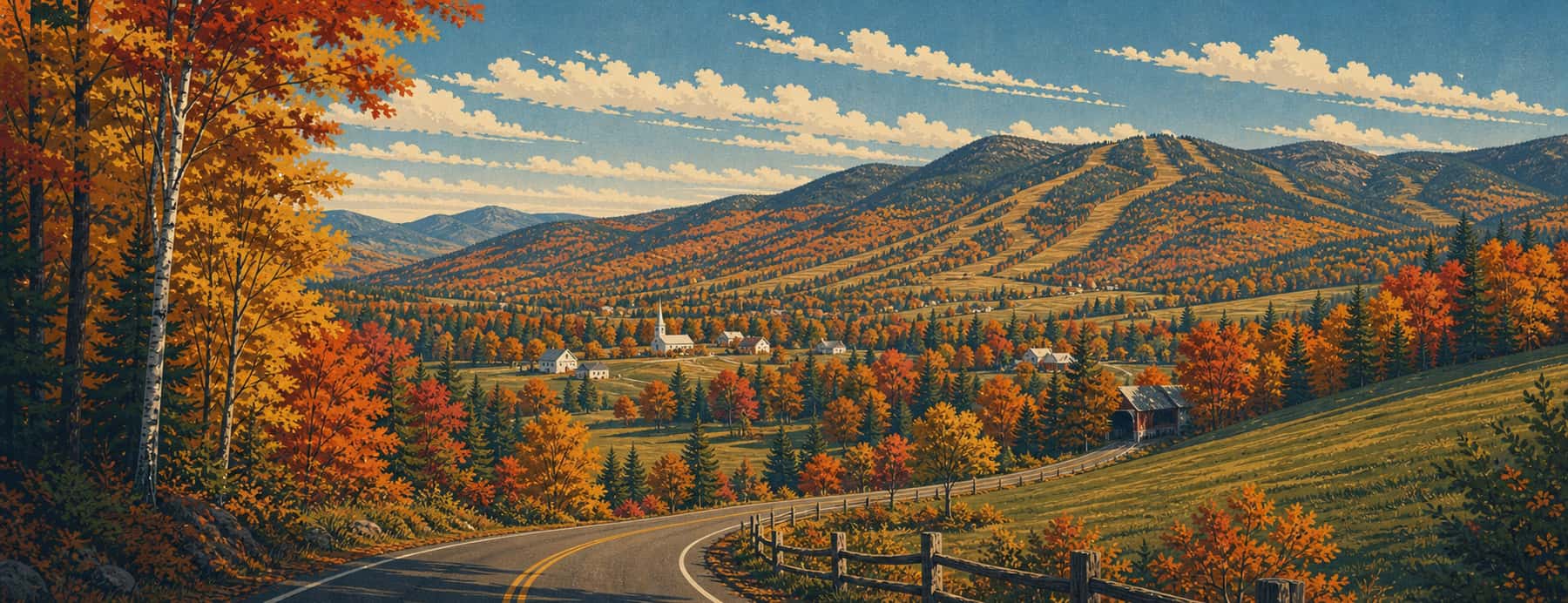
VT Green Mountains
Vermont Route 100
Typical windowLate September → early October; valleys can run later
Make the mountain road the trip: village stops, covered bridges and room to pull over where parking is allowed.
Keep a plan B. If the high ridges are past color, compare lower-valley reports before changing your base.
Vermont Tourism timing guide ↗
Typical timing, not a 2026 observation
NH White Mountains
The Kancamagus Highway
Typical windowEarly → mid-October; elevation changes the window
Follow the Lincoln–Conway corridor, with river walks and overlooks between the mountain views.
Keep a plan B. Use the state report to compare valley color with the higher overlooks; do not assume one peak date for the whole road.
Visit NH foliage road-trip guide ↗
Typical timing, not a 2026 observation
MA Northern Berkshires
The Mohawk Trail
Typical windowLate September → mid-October in the Berkshires
A western Massachusetts road day with mountain views and towns to explore along Route 2.
Keep a plan B. Compare lower and more easterly areas if the uplands have moved past color. Keep the day flexible.
Massachusetts Tourism Berkshires guide ↗
Typical timing, not a 2026 observation
ME Mount Desert Island
Acadia’s coastal loop
Typical windowMid → late October for coastal Maine
Pair the Park Loop Road’s coastal stops with time away from the car. A sea-and-leaves trip, not just a summit chase.
Keep a plan B. Check Maine’s zone report and Acadia’s road and reservation notices before choosing your drive day.
Maine DACF regional timing ↗
Typical timing, not a 2026 observation
CT Lower valleys and shoreline
Connecticut river & coast
Typical windowMid → late October, sometimes into early November
Keep a southern New England option for later dates. Explore the state atlas before selecting individual stops.
Keep a plan B. Northern hills generally turn first; use CT’s historic week-by-week guide and current report to compare the lower valleys.
CTvisit week-by-week timing ↗
Typical timing, not a 2026 observation
RI Southern New England
Rhode Island, unhurried
Typical windowUsually mid → late October; north turns earlier
A smaller-state fall escape: choose your stops from the atlas and leave room for a walk between drives.
Keep a plan B. Use local conditions to choose inland woods or the Newport area; a compact state still has different timing zones.
Visit Rhode Island foliage guide ↗
Typical timing, not a 2026 observation
CO High-country aspen country
Colorado’s San Juan Skyway
Typical windowSeptember → early October; short windows at higher elevations
Turn the Durango–Ouray–Telluride loop into an aspen trip with time for mountain towns between the passes.
Keep a plan B. Check road and weather notices first. Snow and wind can end a high-country plan even when a lower valley still has color.
Colorado Tourism seasonal timing ↗
Typical timing, not a 2026 observation
UT Wasatch Mountains
Utah’s Alpine Loop country
Typical windowMid-September → early October; higher ground starts first
Aspens, canyon maples and mountain scenery around American Fork and Provo canyons. Start with Utah’s atlas and the official byway guide.
Keep a plan B. The road is narrow and seasonal. Check access before committing; this atlas link is not a prebuilt Alpine Loop itinerary.
Visit Utah fall byways guide ↗
Typical timing, not a 2026 observation
UT Boulder Mountain, Utah
Byway 12’s aspen country
Typical windowSeptember → early October on the high mountain section
Pair red-rock country with the wooded climb over Boulder Mountain. Aim the foliage portion at the mountain, not the whole desert route.
Keep a plan B. Use current local reports and weather to choose a day. Lower-elevation scenery is a different experience, not a substitute peak-color promise.
Visit Utah fall byways guide ↗
Typical timing, not a 2026 observation
VA Virginia’s Blue Ridge
Skyline Drive
Typical windowOctober is a useful planning window; elevation shifts the show
Choose a section of the long ridge road and leave time for overlooks. Shenandoah’s changing elevations make one park-wide peak date misleading.
Keep a plan B. Check the park’s dated color updates, webcams and road alerts; nearby lower valleys may be on a different schedule.
Shenandoah National Park fall guide ↗
Typical timing, not a 2026 observation
NC · TN Newfound Gap Road
The Smokies, high to low
Typical windowEarly–mid October up high; mid-October–early November lower down
Compare forest color along the climb from Cherokee toward Newfound Gap and the Tennessee side instead of chasing one date for the whole park.
Keep a plan B. Later dates favor lower and middle elevations. Check road alerts before crossing the gap and do not equate valley color with clear summit roads.
Great Smoky Mountains NPS fall colors ↗
Typical timing, not a 2026 observation
MI Upper Peninsula
Michigan’s Keweenaw Peninsula
Typical windowMid-September → early October in the far north
Use Houghton as an arrival base for the northern peninsula. Explore Michigan’s atlas and the state’s Houghton–Copper Harbor fall drive guide.
Keep a plan B. The Upper and Lower Peninsulas do not turn together. Check Michigan’s color map before committing to the far north.
Pure Michigan Keweenaw timing ↗
Typical timing, not a 2026 observation
MN Minnesota coast & inland hills
Lake Superior’s North Shore
Typical windowMid-September–early October inland; late September–mid-October on shore
Follow Highway 61 for lakeside stops, then compare the inland maple country with the later-changing shoreline.
Keep a plan B. Use Minnesota’s dated reports to choose inland or shore stops. A quiet overlook and a busy trailhead can be only minutes apart.
Explore Minnesota North Shore timing ↗
Typical timing, not a 2026 observation
WA Western valleys & mountain passes
Washington’s Cascade Loop
Typical windowLate September → October; location and elevation matter
Build a fall drive around the western valleys and Stevens Pass portion of the larger loop, with river scenery and small-town stops.
Keep a plan B. Do not assume every pass on the full loop is open. Check mountain-road conditions and shorten the drive if weather moves in.
Washington Tourism fall drives ↗
Typical timing, not a 2026 observation
NY Mountain towns & lake country
New York’s Adirondacks
Typical windowHistorically late September → mid-October
Start around Lake Placid, then use New York’s atlas and current regional reports to choose the lakes and mountain towns for your trip.
Keep a plan B. Higher ground and lakeside towns can be at different stages. Avoid treating the entire Adirondack region as one forecast zone.
I LOVE NY Adirondacks timing ↗
Typical timing, not a 2026 observation
AZ Sedona & the canyon
Arizona’s Oak Creek Canyon
Typical windowLate October → early November; lower canyon areas run later
A late-season road trip with red-rock walls and creekside deciduous trees along SR 89A. Think canyon color, not alpine aspen timing.
Keep a plan B. Compare the upper canyon with Sedona’s lower elevations. Verify trail access and designated parking before choosing your stops.
Visit Sedona seasonal foliage guidance ↗
Typical timing, not a 2026 observation
Arrival links fill in a destination; you add your starting point. They do not automatically follow the scenic byway or build a multi-day itinerary. Open the route guide first for its stops.